



News and Events
Oh brother! These guys can chop
Posted On: August 26, 2026
By Mike Rankin, senior editor, Hay and Forage Grower
 The large forage chopper roared to life. Viewing through the cab window, I watched as the machine gobbled standing corn like a Great Dane eating its first meal after two days of fasting. Sitting next to me and manning the controls with precision was Charlie Schultz, the co-owner of Schultz Brothers Forage Service LLC.
On this fall day, we were traversing cornfields on a dairy farm so close to Chicago that you could almost smell the deep-dish pizza. Schultz and his younger brother Dave started their custom harvesting business a little over 10 years ago. Even though they grew up working on both grandparents’ farms, there was metaphorically no room at the inn when they graduated high school. Dave eventually began hauling livestock across the country while Charlie, after graduating from Iowa State University with a degree in agricultural education, managed river terminals for a large grain exporter.
“The time eventually came when we both wanted to get back into something closer to farming and be near family,” Schultz explained over the clamor of the chopper. “In the fall of 2014 while still working those other jobs, we started doing some custom chopping with a used harvester we had purchased. That went well, and we saw a need and had the opportunity to move full time into custom farming in 2015.”
That fortuitous opportunity arose when an existing custom business desired to downsize, and the owner wanted to focus more on his own farm. The Schultzes bought some of the equipment, including two more choppers, and began harvesting for the former business’s customer base.
Initially, the brothers worked out of a small shop at Dave’s house. As that facility started to bulge at the seams, they began planning for the construction of a new facility. Once again, Lady Luck came calling when an existing set of buildings came up for sale that fit their needs.
A full-service provider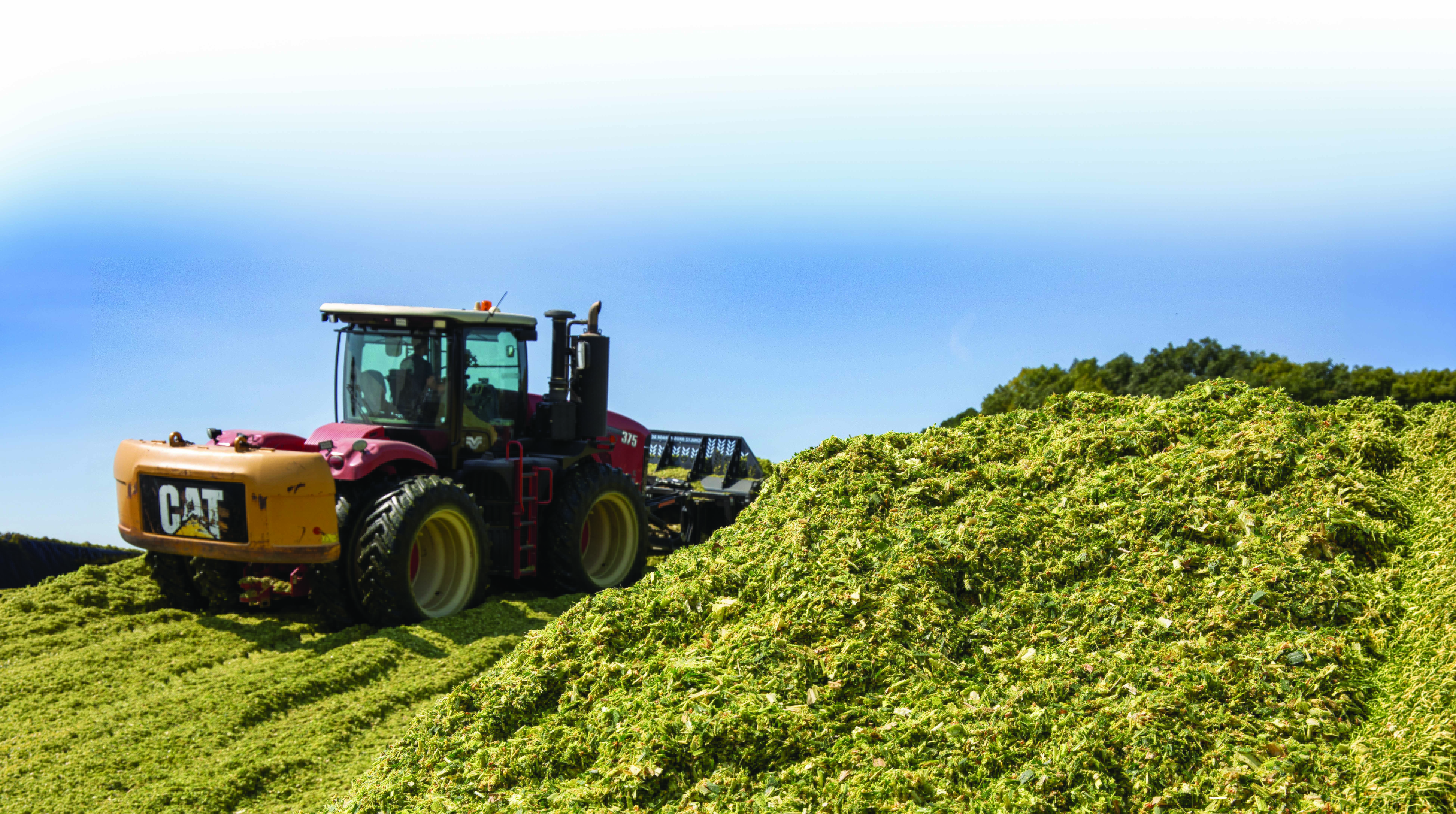
Schultz Brothers Forage Service stays equipped to provide any services related to feed. The business currently chops corn and hay crops and does mowing, tedding, merging, large-square baling, and round baling. “When we started out, baling was a much bigger part of our business, but now it’s a lot more chopping,” Schultz noted. “In addition to forage harvesting, we also do some custom tillage, planting, and combining, but those activities are done on a smaller scale than the feed services.”
The Schultzs run three Pottinger triple mowers (one with conditioners), three mergers (two Oxbo and a Kuhn), and have one to two balers of each type, depending on the current demand and the ages of machines.
Three Claas 980 choppers and one 970 model comprise the forage harvester inventory. “Now, it seems like the industry is changing and those types of machines are more difficult to find. People are running their choppers longer before trading them in. We’d like to update a few of our current machines, but we’re still discussing how we want to deal with that. Our current fleet of choppers are within an age range where parts are interchangeable, so if we buy something new, that’s going to result in the need for an expanded parts inventory.”
The custom business also uses about 20 of their own trucks, which include both straight trucks and semitractor-trailers. “We’re kind of unique for this region in that we travel a long way between jobs, so we’ve had to stick with road-ready tires on the trucks and trailers rather than go to the agricultural flotation tires,” Schultz said. “We work about a 150-mile radius from our shop, which includes farms in Illinois, Wisconsin, and Iowa.
It’s a business 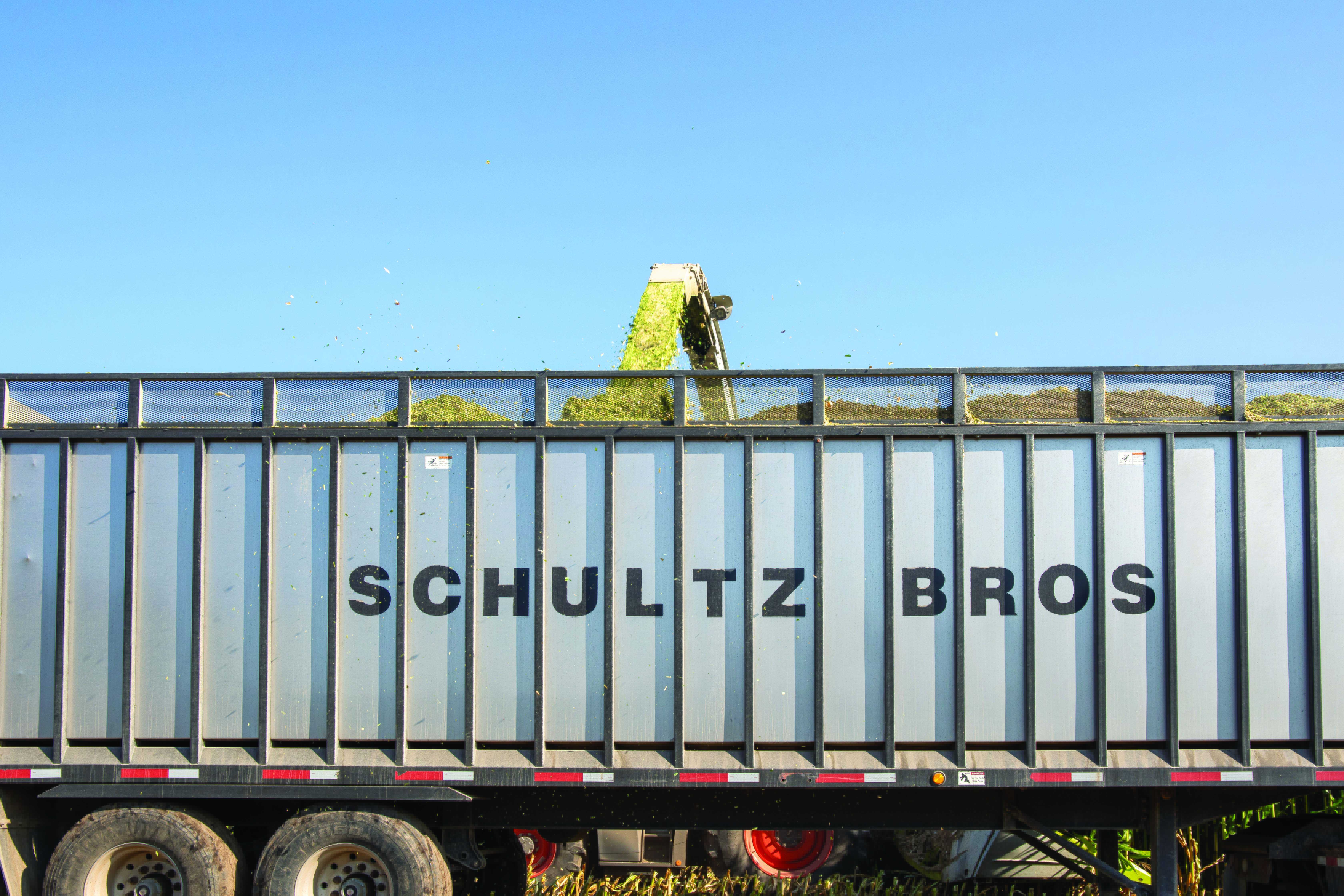
Each year, the brothers chop or bale about 10,000 acres of hay and do a similar amount of corn silage and earlage, with the latter mostly harvested for beef operations. During the busy corn silage harvest, they will run three different crews on separate farms. “We don’t harvest for many operations with storage systems that can handle feed from more than one chopper,” Schultz explained. “Our customer base remains mostly stable, and over time, we have been able to focus on clients that best fit our system and resources. We eventually figured out that it was okay to say ‘no’ to wishful clients.”
The two brothers can’t cover the number of acres and miles required to serve customers by themselves. To make that happen, they’ve built a deep and dependable workforce. “We’ve been fortunate to have a good core team of employees,” Schultz said emphatically. “We typically have two to four full-time employees along with a group of about 50 part-time or seasonal workers. The part-time employees come from a variety of backgrounds, including other local farmers, people with other seasonal jobs, retired farmers, and those that just find silage harvest to be a lot of fun.”
Unlike most corporations, the CEO and CFO of a custom harvesting business are the same individuals who turn the wrenches and unplug the choppers. For Schultz Brothers Forage Services LLC, Charlie takes care of payroll, client billing, and the financials.
The custom business charges their clients based on the running machine hour, but a few field operations such as merging are charged by the acre. Schultz said he’s sharpened his business acumen over the past 10 years. Although he had been used to employee management in his previous job, he underestimated the amount of time needed for collecting payments, especially at the beginning. “Over time, some of that has sorted itself out, and now we have a customer base that is good about making payments or at least letting us know what their intentions for making payments are.”
Relationships breed success 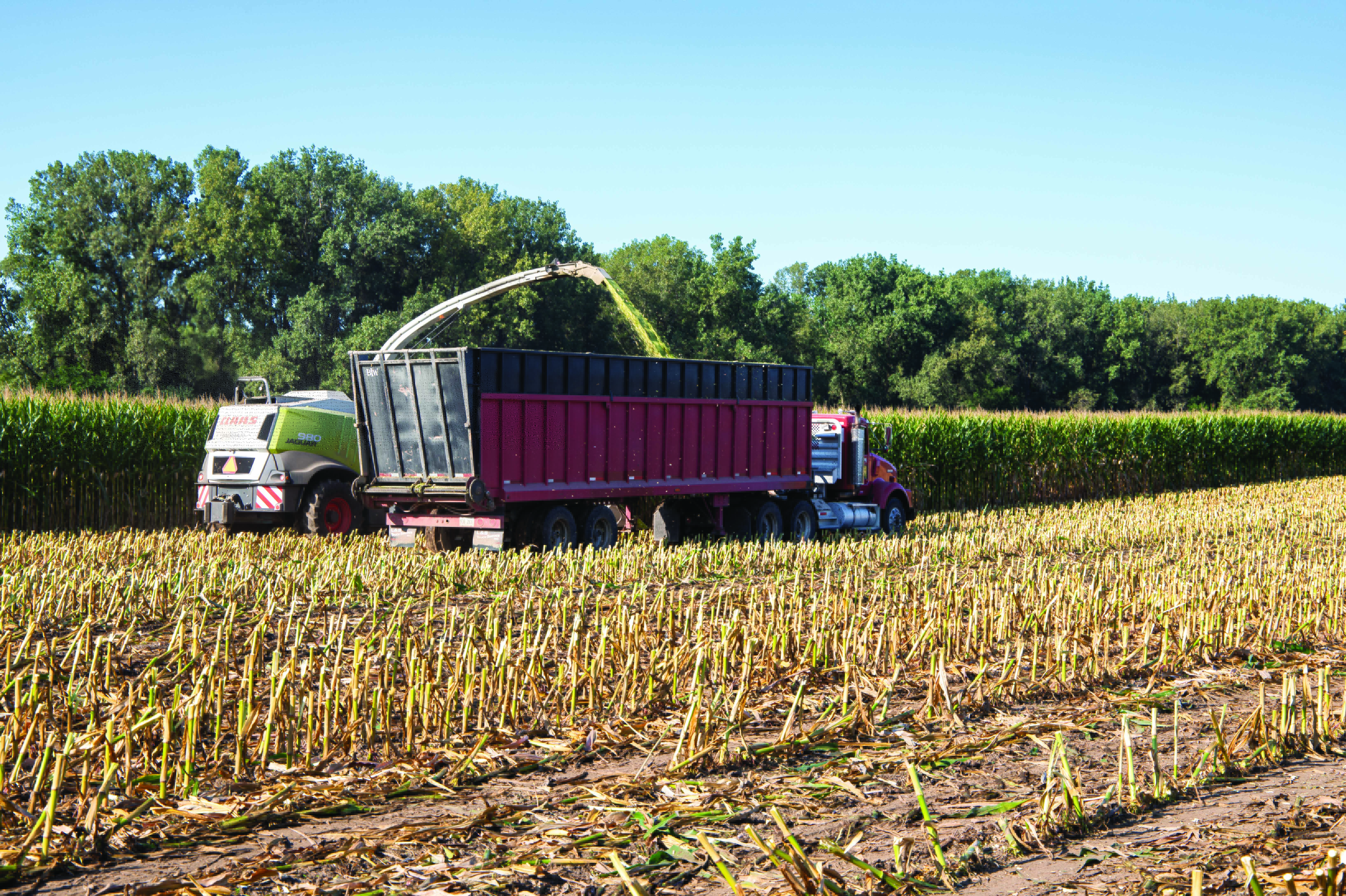
Trust and honesty are virtues that stand at the forefront of any successful custom forage harvesting business. When the equipment is working and the weather is good, everyone’s happy. It’s when those things don’t occur that the strength of a relationship is tested. If the weather turns unfavorable for harvesting, Schultz said the best you can do is just stay honest with clients and keep everyone informed of your situation. “Sometimes it just comes down to first call, first served.”
Nutritionists also play a key role in helping the brothers prioritize farms since some of them are servicing several of their clients. “We pride ourselves on doing the best quality job that we can and value our relationships with a farm’s nutritionist,” the elder brother said. “If you can please the nutritionist, they are more likely to recommend you to other good farms. Nutritionists have come to appreciate the consistent results we provide to their clients. That level of confidence has taken time to develop, but trust is critical in this business. At a minimum, I check the silage pile every morning and night and then make sure someone is monitoring the silage during the day,” he added.
The Schultzes also value their time spent building relationships with others in the custom harvesting industry. They have been active members of the Wisconsin Custom Operators organization since their business began. Charlie currently serves on its board of directors. “It’s been a valuable networking opportunity,” he said of the organization’s annual symposium that they attend every year in Wisconsin Dells.
Schultz acknowledged that being in the custom harvesting business isn’t always easy on the families at home, but theirs have always been supportive. He and his wife, Jen, have two children while Dave and his wife, Amy, are the parents of three children.
When asked about what the future might look like for the business, Schultz said they are willing to grow but not actively looking to do so. “I still like the variety of work associated with custom harvesting. I appreciate working with our clients and employees and strengthening the relationships we’ve developed with other custom harvesters.”
Schultz noted that they’ve had some clients retire, so that’s allowed them to add a few new ones. He prefers the diverse clientele that they serve. “Some custom operators basically service only a few large dairies, but we’re not comfortable putting all of our eggs in one basket, so to speak,” he explained. “If one of our clients retires or someone calls and says they don’t need us anymore, I know we’ll still be in business. I like the relationships we’ve built with some of our smaller clients, and they really appreciate we’re willing to come in and harvest for them. It makes you feel satisfied.”
On this day of chopping, as Schultz hoped to finish the suburban Chicagoland farm and be home before midnight, his brother was back in the Wisconsin shop prepping machinery for his next day’s job in Waukon, Iowa. The goal: Keep the choppers fed. There’s no time for fasting.